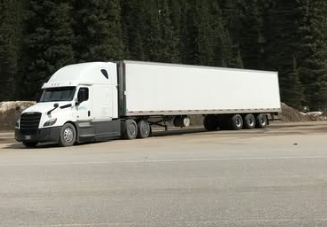
One of the biggest opportunities in freight transport is hiding in plain sight: the truck that is already on the road.
A truck delivers cargo from Nairobi to Kisumu. Another moves goods from Nakuru to Nairobi. A truck leaves Mombasa for Nairobi, or travels from Eldoret toward the coast.
The delivery is completed.
The cargo is offloaded.
And then the truck turns around — empty.
That return journey still consumes fuel. The driver is still working. The tyres are still wearing down. The vehicle is still depreciating. The owner is still paying for insurance, maintenance and financing.
But there is no additional revenue.
This is known as an empty return trip, or deadheading. When a truck finds cargo for its return journey, that cargo is commonly referred to as a backhaul or return load.
For Kenya and the wider East African logistics network, this represents a major opportunity.
The Northern Corridor Transport Observatory has highlighted the scale of empty trucking on regional freight corridors, with one corridor study reporting that nearly 70% of trucks were returning empty in the corridors examined. The same authority has recommended measures such as route optimisation, reverse logistics and truck aggregation to reduce empty returns.
The truck doesn’t have to come back empty.
This is where Balozy can make a difference.
Turn the Return Journey Into an Opportunity
Imagine a driver operating a truck from Nairobi to Kisumu.
The driver has a confirmed load going to Kisumu.
After delivering the cargo, the truck needs to return to Nairobi.
Instead of the driver simply heading back empty, imagine a customer in Kisumu looking for a truck to transport goods to Nairobi.
The truck is already there.
The driver is already returning.
The route already exists.
The capacity already exists.
The only missing piece is the connection.
That is the opportunity Balozy can help create.
Balozy can give freight drivers and transport providers a place to list their services, routes, vehicle types and available capacity, while customers can search for transport providers who may already be travelling in the direction they need.
The objective is simple:
Don’t come back empty when there is freight that needs to move.
Why Empty Return Trips Are Expensive
A truck doesn’t become free simply because it has delivered its cargo.
The costs continue.
Fuel is required to complete the return journey. Drivers need to be paid. Tyres experience wear. Maintenance costs continue to accumulate. The truck loses value through use and time.
Whether the truck is carrying 20 tonnes of cargo or nothing at all, many of these costs still exist.
That means an empty return trip can represent a lost revenue opportunity.
Research on freight transportation consistently identifies empty running as a major source of inefficiency because transport capacity is being used without generating revenue on that leg of the journey.
For a small truck owner or independent driver, this can be especially important.
One empty trip may seem insignificant.
But multiply that by several trips every month.
Then multiply it across hundreds or thousands of trucks.
The opportunity becomes much bigger.
Balozy Can Help Connect the Two Sides
The problem isn’t always that there is no cargo.
Sometimes the problem is that the person who has the truck doesn’t know who needs the truck.
At the same time, the person who needs transport may not know which truck is already travelling along that route.
This creates a classic marketplace problem:
Available capacity on one side. Demand on the other. Poor visibility between them.
Balozy can help bridge that gap.
A driver can create a listing such as:
Truck Available
Route: Nairobi → Kisumu
Vehicle: 10-ton truck
Capacity: Available space
Cargo: General goods
Availability: Returning from Kisumu to Nairobi
Location: Kisumu
A customer searching for transport from Kisumu to Nairobi can then discover that provider.
Instead of the driver asking:
“Where can I find a load?”
And the customer asking:
“Where can I find a truck?”
Balozy can help bring both sides together.
From Empty Truck to Revenue Opportunity
The concept is bigger than simply finding another job.
It is about improving vehicle utilisation.
A truck that generates revenue in both directions is potentially more productive than a truck that earns money only on the outbound journey and returns empty.
For the driver, the return load can help offset some of the cost of the journey.
For the customer, the availability of a truck already travelling that route can create another transport option.
For the logistics ecosystem, better matching can reduce wasted capacity.
And for Balozy, this creates an important marketplace opportunity:
Help people discover capacity that already exists.
Think About the Kenyan Routes
Consider some of the major movement patterns across Kenya.
Nairobi → Nakuru.
Nakuru → Nairobi.
Nairobi → Eldoret.
Eldoret → Nairobi.
Nairobi → Kisumu.
Kisumu → Nairobi.
Mombasa → Nairobi.
Nairobi → Mombasa.
Nakuru → Eldoret.
Eldoret → Nakuru.
There are trucks moving along these routes every day.
Some are carrying full loads.
Some have partial capacity.
Some will eventually return with little or no cargo.
The question becomes:
Can that available capacity be discovered before the truck starts the return journey?
That is where a digital marketplace like Balozy can become valuable.
“Don’t Come Back Empty”
This can become more than a marketing slogan.
It can become a mindset for freight operators.
Don’t Come Back Empty.
If you have a truck travelling from Nairobi to Kisumu, let people know.
If you are returning from Kisumu to Nairobi, let people know.
If you have available capacity, list it.
If your truck will be available after completing a delivery, make that information discoverable.
A driver shouldn’t always have to depend on phone calls, personal contacts and WhatsApp groups to discover whether there is another customer along the route.
Digital visibility can make that process easier.
Existing logistics marketplaces in Kenya are already demonstrating interest in using digital platforms to connect cargo owners and transport providers and to reduce empty return trips.
Balozy’s opportunity is to approach the problem from its broader marketplace model:
Let the transport provider list the service. Let the customer find the provider. Let them connect directly.
A New Opportunity for Independent Truck Drivers
Large logistics companies may have dispatch teams, fleet managers and established customer networks.
But not every truck owner has that infrastructure.
There are independent truck owners.
Owner-operators.
Small transport businesses.
Drivers with one truck.
Businesses with two or three trucks.
Operators who know their routes extremely well but don’t necessarily have a large sales department finding their next customer.
For them, visibility matters.
Balozy can give a transport provider a digital presence where they can showcase:
- The type of truck they operate
- Truck capacity
- Routes they serve
- Cargo they can carry
- Current location
- Available dates
- Return routes
- Service description
- Customer reviews
- Contact or connection options
Instead of waiting for someone to call, the driver can have a listing that works as a digital storefront for their transport business.
The Customer Has a Problem Too
The empty-return problem isn’t only a driver’s problem.
Customers also struggle to find transport.
A business may have goods in Kisumu that need to reach Nairobi.
Another may have agricultural products moving from Nakuru.
A construction company may need materials transported from Nairobi to another town.
A retailer may need stock moved between warehouses.
A small business may not have a dedicated fleet.
They need a truck.
But where do they start?
They might ask another business.
Call a driver they used six months ago.
Search through WhatsApp contacts.
Ask for recommendations.
Call several transport companies.
Wait for responses.
This can be slow and uncertain.
Balozy can change the discovery process by allowing the customer to search for transport providers based on what they need.
The Power of Route-Based Discovery
One of the biggest opportunities for Balozy is route-based search.
A customer shouldn’t have to search for a generic term like:
“truck.”
They should eventually be able to search around a specific need:
Truck from Nairobi to Kisumu.
Lorry from Nakuru to Nairobi.
Freight transport from Kisumu to Nairobi.
10-ton truck from Nairobi to Eldoret.
Return truck from Kisumu to Nairobi.
This makes the marketplace much more useful.
The customer’s question isn’t simply:
“Who owns a truck?”
The question is:
“Who has the right truck, in the right place, going in the right direction?”
That’s a much more valuable search.
The Bigger Economic Opportunity
Reducing empty trips isn’t simply about helping one driver make more money.
It can potentially create a ripple effect across the freight ecosystem.
For drivers:
More opportunities to monetise journeys they were already going to make.
For truck owners:
Better utilisation of expensive assets.
For customers:
More options when looking for freight transport.
For businesses:
Potentially easier access to transport capacity.
For logistics operators:
Better visibility into available vehicles and routes.
For the environment:
Better utilisation of existing vehicle movements can reduce unnecessary empty kilometres.
The Northern Corridor Transport and Transit Coordination Authority has specifically linked reducing empty returns with route optimisation, reverse logistics and truck aggregation as ways to improve cost-effectiveness and reduce emissions.
Balozy Doesn’t Need to Own the Trucks
This is one of the most important parts of the Balozy model.
Balozy doesn’t necessarily need to become a trucking company.
It doesn’t need to buy thousands of trucks.
It doesn’t need to employ every driver.
It can build the marketplace where the transport supply already exists.
The trucks already exist.
The drivers already exist.
The businesses that need transport already exist.
The opportunity is to improve how easily they can discover one another.
That is the power of a marketplace.
The Vision: Make Capacity Visible
Imagine a future where a driver knows:
“I’m delivering in Kisumu tomorrow. I have capacity available for the return trip to Nairobi.”
The driver lists it.
A customer searching for Kisumu → Nairobi transport finds the listing.
They connect.
The driver gets an opportunity.
The customer finds transport.
A truck that might have returned empty has another potential revenue-generating opportunity.
That’s the bigger problem Balozy can help address.
Not simply finding trucks.
Not simply finding customers.
But making existing transport capacity more visible and easier to discover.
The Balozy Freight Philosophy
The idea can be reduced to three simple steps:
LIST. DISCOVER. CONNECT.
Drivers list their transport services.
Customers discover the right transport provider.
Both sides connect directly.
And when a driver has finished a delivery?
Don’t automatically think:
“Now I have to go back empty.”
Think:
“Who needs transport in the direction I’m going?”
That is the opportunity.
From Empty Return Trips to Smart Freight Discovery
The future of freight transport doesn’t have to be about adding more trucks to the road.
Sometimes, it is about making better use of the trucks already there.
A truck travelling empty represents unused capacity.
A customer looking for transport represents unmet demand.
Balozy can sit between those two problems and help make the connection possible.
A truck shouldn’t have to return empty simply because the driver couldn’t find someone who needed the space.
With better visibility, better discovery and direct connections between transport providers and customers, every journey can potentially become an opportunity.
Have a truck? List your service.
Need transport? Find a provider.
Going back empty? Let customers know you have space.
Balozy — helping freight find the right transport, and helping transport find the next load.
