
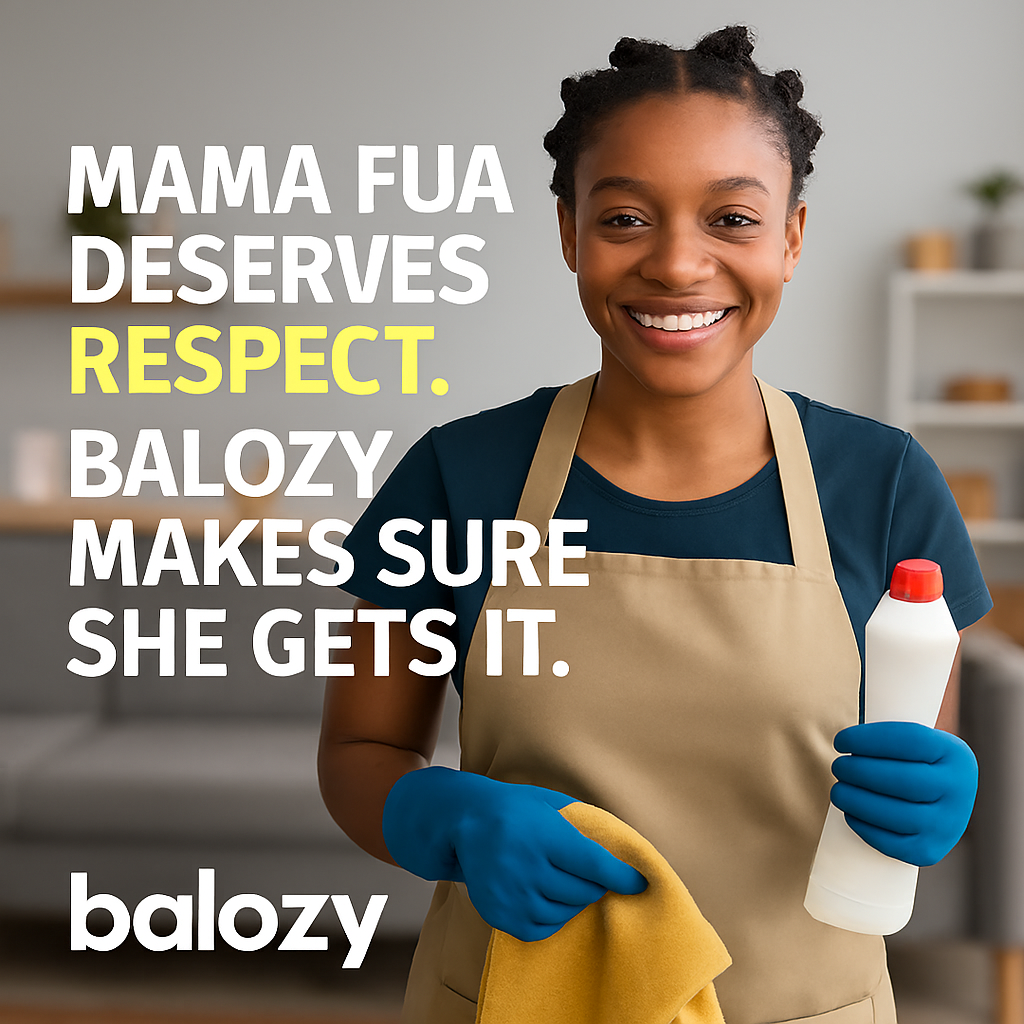
Across Kenya and much of Africa, the informal economy is the heartbeat of daily life. Every day, millions of women wake up to clean homes, cook meals, tailor clothes, braid hair, tutor children, or care for the elderly. These skill‑based hustles are more than tasks; they are lifelines that sustain families, educate children, and keep communities functioning. Yet, despite their resilience and contribution, low‑income women remain financially excluded, underpaid, and undervalued.
The paradox is striking. Women form the majority of the informal workforce, yet they are the least likely to access credit, savings, or insurance. They are the most trusted caregivers and service providers in their neighborhoods, yet they often operate without contracts, verification, or protection. Their skills are abundant, but the systems to recognize, reward, and scale those skills are scarce. This is where Balozy steps in.
Balozy was created with a clear mission: to financially empower low‑income women by leveraging their unique skillsets through more efficient means. We believe that dignity, trust, and authenticity should not be luxuries reserved for formal employment. They should be embedded in every hustle, every gig, and every service transaction. By digitizing trust and streamlining access to opportunity, Balozy transforms everyday skills into sustainable livelihoods.
Low‑income women face a web of challenges: financial exclusion, social stigma, safety risks, inefficiency, and undervaluation. Many do not have bank accounts, credit histories, or savings mechanisms. Without these, they cannot access loans to expand their businesses, insurance to protect their families, or savings to secure their futures. Hustles are often cash‑based, leaving no digital trail that banks can recognize. Women rely on informal savings groups, which, while useful, lack the security and scalability of formal banking. Without insurance, a single illness or accident can wipe out years of effort.
Casual work is often dismissed as “unskilled” or “low‑value.” Mama fuas, caterers, and tailors are seen as temporary workers rather than professionals. This stigma undermines their dignity and bargaining power. Clients exploit this stigma to underpay or delay payments. Young women inherit the same stigma, discouraging them from pursuing hustles as legitimate careers. By failing to recognize the value of these skills, society denies women the respect and compensation they deserve.
Operating in the informal economy exposes women to significant risks. Without contracts, verification, or legal protections, they are vulnerable to exploitation. Many women report clients refusing to pay after services are rendered. Entering strangers’ homes without verification exposes women to harassment or violence. With no contracts or legal frameworks, women have little protection when disputes arise. Trust is the currency of hustles, yet in the informal economy, it is fragile and easily broken.
Traditional hustles rely heavily on word‑of‑mouth referrals. While community networks are strong, they are limited in reach and efficiency. Women spend hours negotiating prices, chasing clients, or waiting for referrals. Work opportunities are irregular, leading to unstable earnings. Women are often confined to their immediate neighborhoods, unable to expand their client base. This inefficiency drains time and energy, leaving women with little room to grow their hustles into sustainable enterprises.
Over the years, NGOs, microfinance institutions, and government programs have attempted to address these challenges. While valuable, they often fall short because programs reach only small groups, leaving millions excluded. Aid often creates reliance rather than empowerment. Without verification, clients remain hesitant to engage with hustlers. Financial inclusion efforts are disconnected from skill recognition and market access. What women need is not charity, but a system that recognizes their skills, verifies their hustles, and connects them to opportunities efficiently. This is the gap that Balozy fills.
At the heart of Balozy is authenticity. We recognize that hustles are not “side jobs” or “casual work.” They are legitimate professions that deserve respect. Whether it is a mama fua cleaning homes, a tailor stitching uniforms, or a caregiver tending to children, each hustle carries skill, effort, and value. By verifying hustlers and showcasing their skills, Balozy restores dignity to work that has long been undervalued. Hustlers are presented as professionals, with profiles, ratings, and verified records that elevate their status.
Efficiency is the cornerstone of empowerment. Traditionally, hustlers rely on word‑of‑mouth referrals, irregular payments, and informal negotiations. Balozy introduces technology to eliminate inefficiencies and build trust. Accessible via smartphones, Balozy ensures that hustlers can connect with clients anytime, anywhere. Escrow payments guarantee women are paid fairly and promptly. Transparent ratings create a feedback loop that builds trust and accountability. Every transaction is logged, creating a financial history that women can use to access loans, savings, and insurance.
Balozy is more than a marketplace; it is a cultural movement. We digitize African values of trust, resilience, and creativity, embedding them into every interaction. Hustles thrive on trust. By verifying professionals, Balozy digitizes trust, making it scalable and reliable. Women have always been resilient, balancing hustles with family responsibilities. Balozy celebrates this resilience by turning it into economic strength. From tailoring to catering, hustles are expressions of creativity. Balozy ensures this creativity is recognized and rewarded.
Financial empowerment requires more than technology; it requires partnerships. Balozy collaborates with banks, NGOs, fintechs, and investors to expand financial inclusion. By providing verified financial records, Balozy enables women to access loans and savings products. Partnerships with NGOs amplify impact, reaching marginalized communities and providing training. Integration with mobile money platforms like M‑PESA ensures seamless transactions. By supporting Balozy, investors contribute to a scalable model of empowerment that delivers both social and financial returns.
The informal economy is rich with talent. Across Kenya, low‑income women possess unique skillsets that sustain households and communities. From cleaning and catering to tailoring and caregiving, these skills are not just survival tactics — they are economic engines waiting to be unlocked. Balozy’s mission is to recognize, validate, and leverage these skillsets through efficient means, transforming hustles into enterprises and women into entrepreneurs.
Trust is the currency of hustles. Without verification, women risk exploitation, unpaid labor, and stigma. Balozy addresses this by validating skillsets through a robust verification system. Hustlers are vetted to ensure safety and reliability. Practical demonstrations confirm competence in specific trades. Verified hustlers receive professional profiles showcasing their skills, ratings, and transaction history. Clients provide feedback, reinforcing trust and accountability. Verification transforms hustlers into professionals. It builds confidence for clients and dignity for women, ensuring that their skills are recognized and rewarded.
Efficiency is not just about speed; it is about dignity. By reducing inefficiencies, Balozy ensures that women’s time and effort are respected. Instant connections link clients to verified hustlers. Standardized pricing and escrow payments eliminate endless bargaining. Transparent ratings ensure accountability and continuous improvement. Women can access clients beyond their neighborhoods, scaling their hustles across cities. Efficiency empowers women to focus on their skills rather than survival.
Financial empowerment is more than earning money. It is about stability, growth, and resilience. For low‑income women, hustles provide income, but without systems of savings, credit, and insurance, that income often disappears as quickly as it arrives. Balozy bridges this gap by embedding financial empowerment into every transaction, ensuring that hustles translate into long‑term prosperity. Verified clients reduce the risk of unpaid labor. Escrow payments guarantee fair compensation. Transparent ratings encourage repeat clients, creating consistent work opportunities. Digital matching allows women to access clients beyond their neighborhoods, increasing demand.
Savings are the foundation of financial empowerment. Yet, many low‑income women lack access to secure savings mechanisms. Balozy creates digital records of transactions, enabling women to save formally. Every transaction is logged, creating a financial history. Verified records allow women to open savings accounts with banks. Integration with platforms like M‑PESA ensures seamless savings. Traditional savings groups can be digitized, increasing security and scalability. Savings provide stability. They allow women to handle emergencies, invest in businesses, and secure their futures.
Financial empowerment has ripple effects across generations. Empowered women invest in families, creating cycles of prosperity. Children remain in school because mothers can afford fees, uniforms, and supplies. Families access medical care, reducing vulnerability to illness. Consistent income ensures food security, improving health outcomes. Financial security reduces stress, strengthening relationships and household resilience. Empowered mothers raise daughters who see hustles as legitimate careers, breaking cycles of poverty.
The broader social impact of Balozy’s mission is profound. Empowered women strengthen families, build communities, drive national economies, and challenge